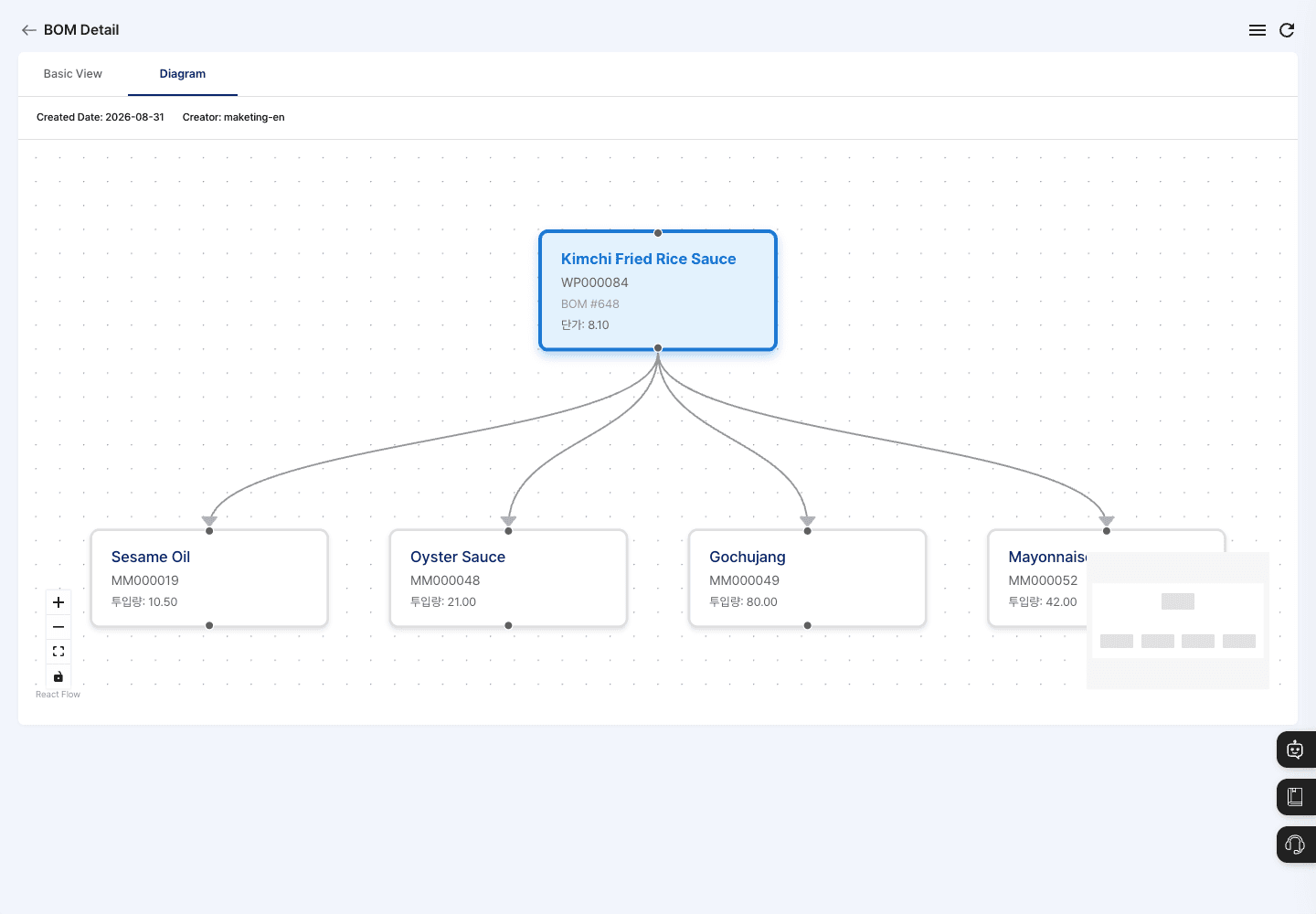
Accurate BOM requirements
Standardize raw materials, intermediate items, and quantities for material planning.
MANUFACTURING MASTER DATA
A BOM (Bill of Materials) defines the raw materials, intermediate items, and quantities a product needs. A BOP (Bill of Process) connects those materials to the sequence used to make it.
Standardize raw materials, intermediate items, and quantities for material planning.
Connect sequence, BOM, equipment, process area, and duration into one routing standard.
Apply the same BOM and BOP to production plans and work orders.
Connect sequence, BOM, equipment, process area, and duration into one routing standard.
Apply the same BOM and BOP to production plans and work orders.
BOM defines what materials and quantities are needed. BOP defines the process sequence and operating standards used to manufacture the product.
The BOM drives material requirements, while the BOP supplies the process structure and work sequence for the production plan.
See producible quantities and shortages in metrics and charts, then find exactly what each process is short of.
Explore feature →Use orders, inventory, BOM, and BOP to propose an executable production schedule.
Explore feature →We will walk through your flow from production planning and execution to inventory and shipping.

